
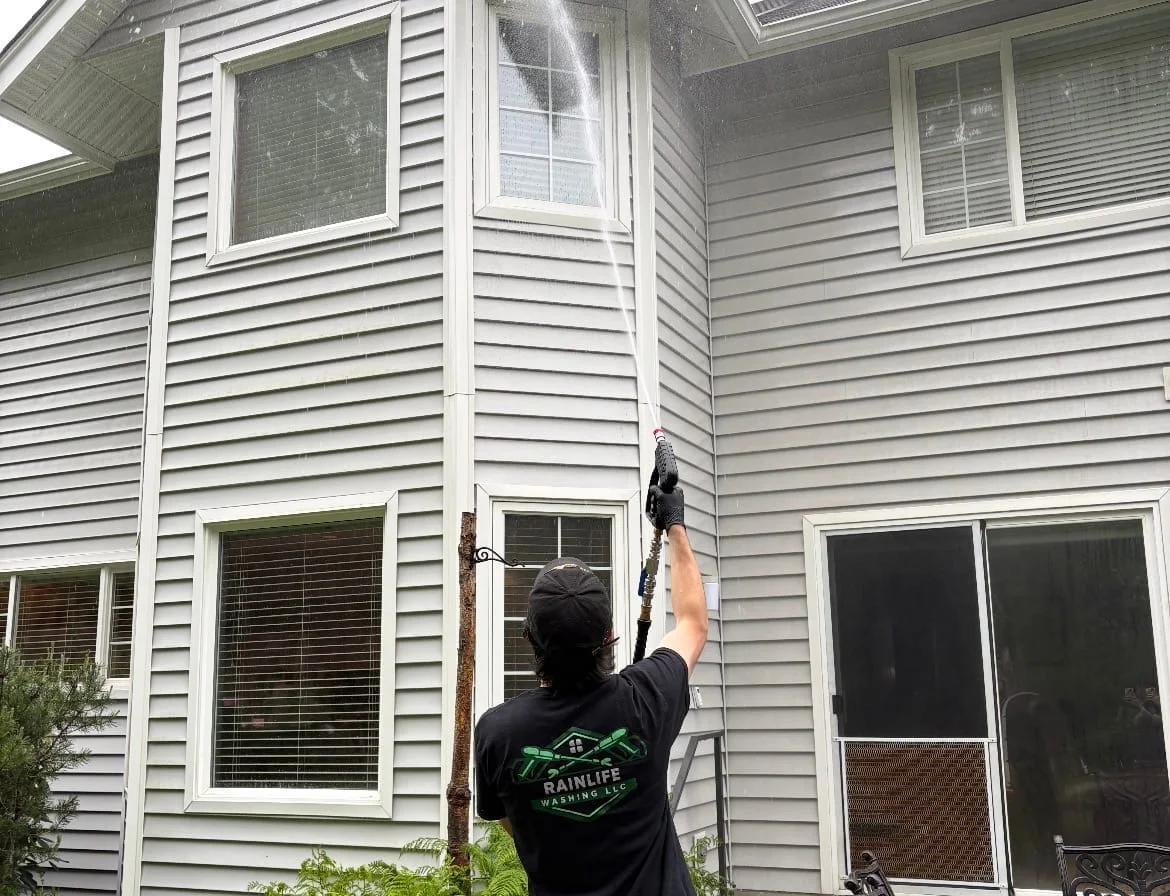
Cleans Beyond the Surface
Algae, mildew, and moss continue growing if they're only rinsed away. Our soft washing process treats organic buildup at the source, helping surfaces stay cleaner for longer.
A deeper clean for your siding.
North-facing walls and shaded areas collect moisture, grime, and green buildup over time. Our low-pressure soft wash process safely restores siding while protecting paint, vinyl, and other exterior materials.
Algae, mildew, and moss continue growing if they're only rinsed away. Our soft washing process treats organic buildup at the source, helping surfaces stay cleaner for longer.
High pressure can damage paint, crack vinyl, and force water behind siding. We use low-pressure soft washing methods designed to clean thoroughly while protecting your home's exterior.
We take steps to protect plants and surrounding landscaping throughout the cleaning process with thorough rinsing and controlled application methods designed for residential and commercial properties.
We thoroughly rinse all plants, landscaping, and surrounding surfaces before we start to protect them from any overspray.
We apply our soft-wash solution to all surfaces at low pressure, breaking down algae, mildew, and surface buildup from the top of the house down.
We rinse the entire property from top to bottom, flushing away all loosened grime and diluting any remaining solution in the landscaping.
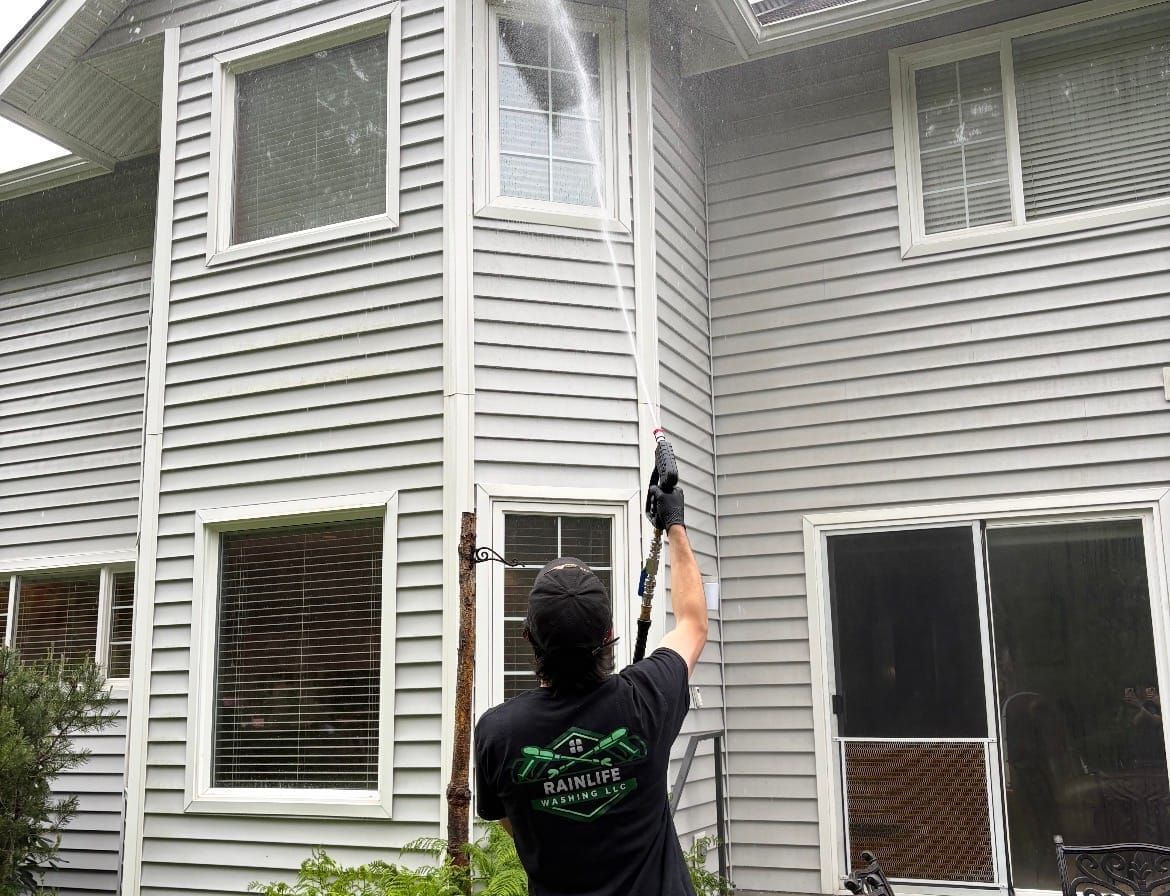
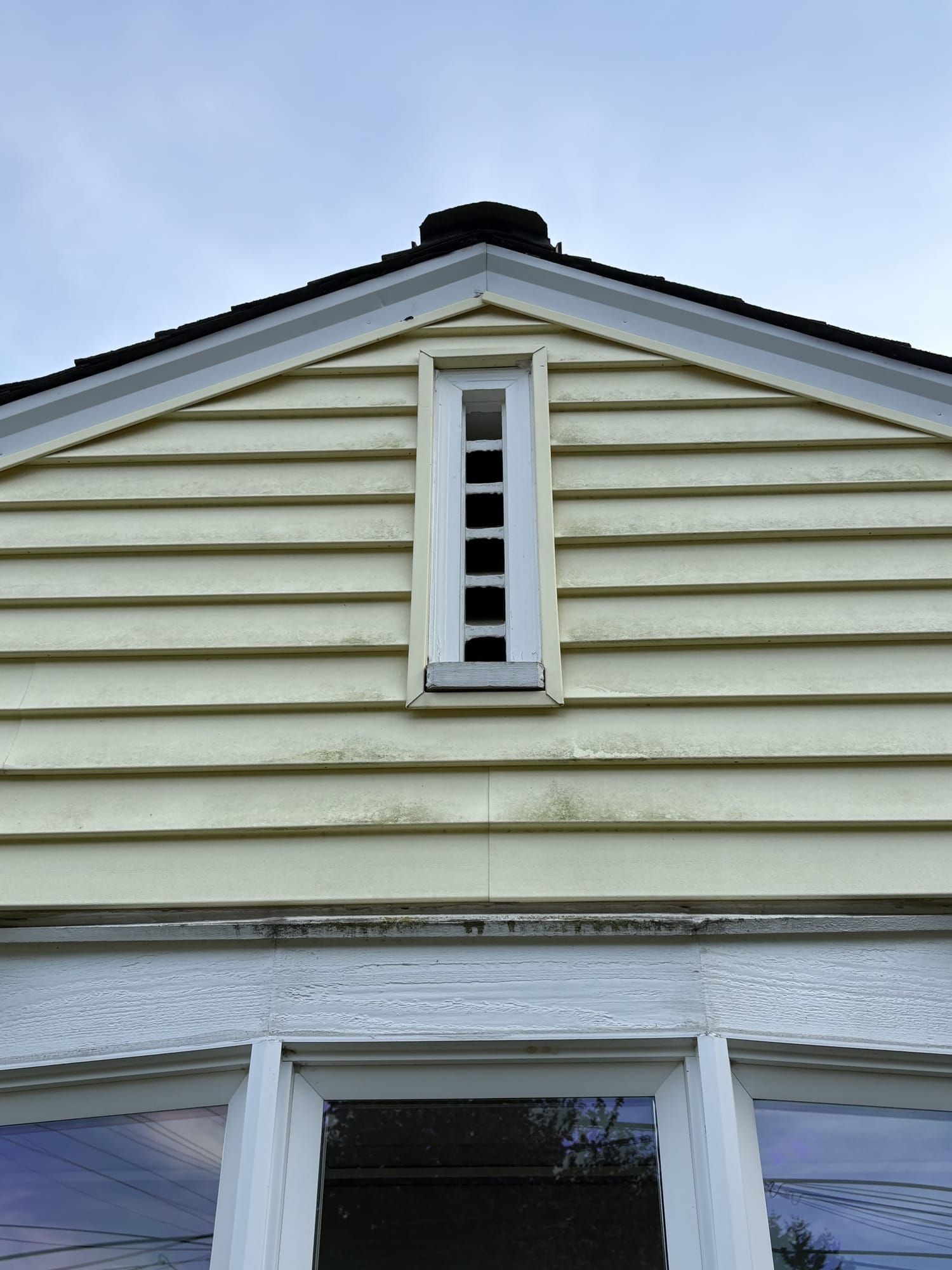
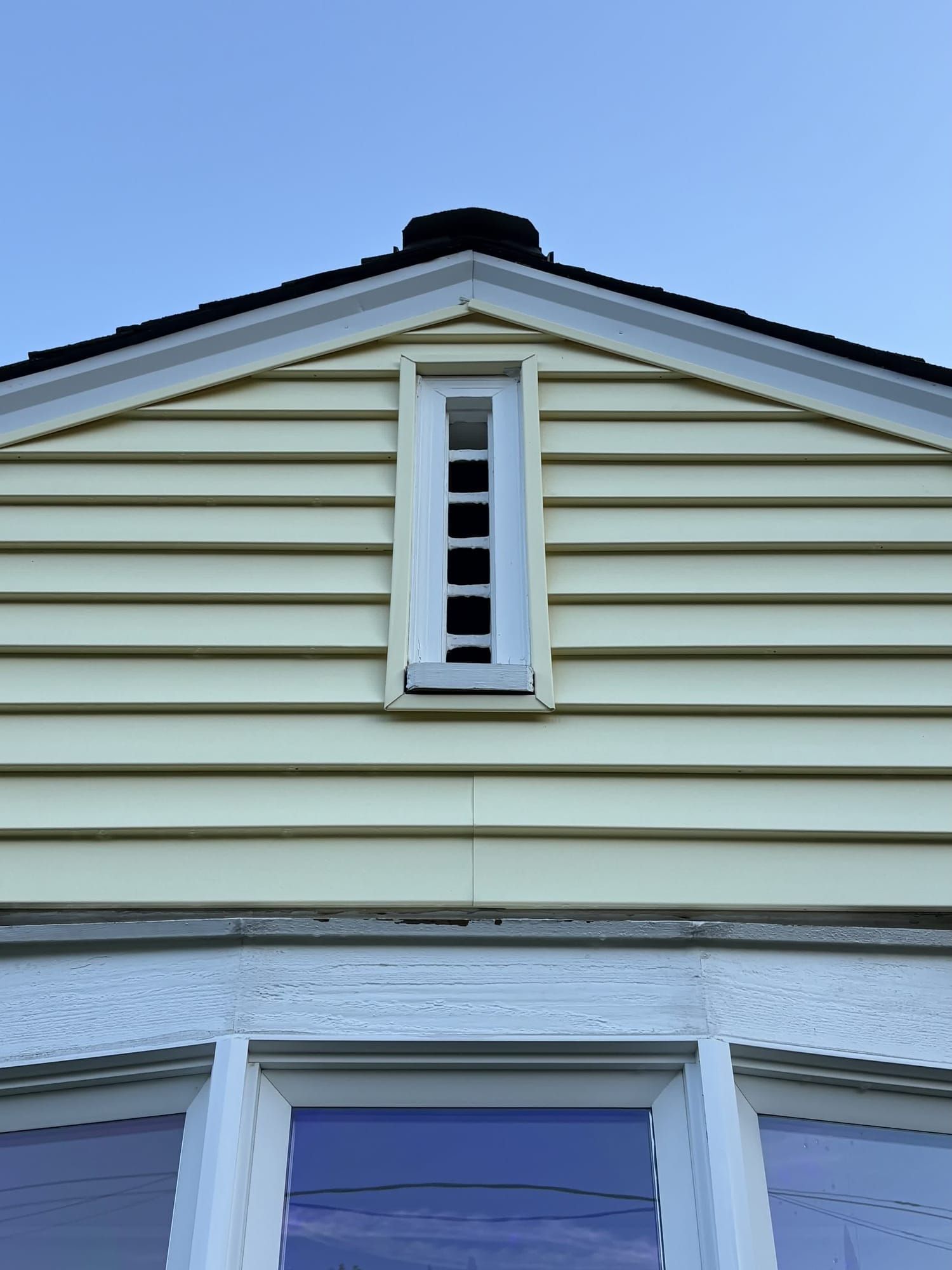
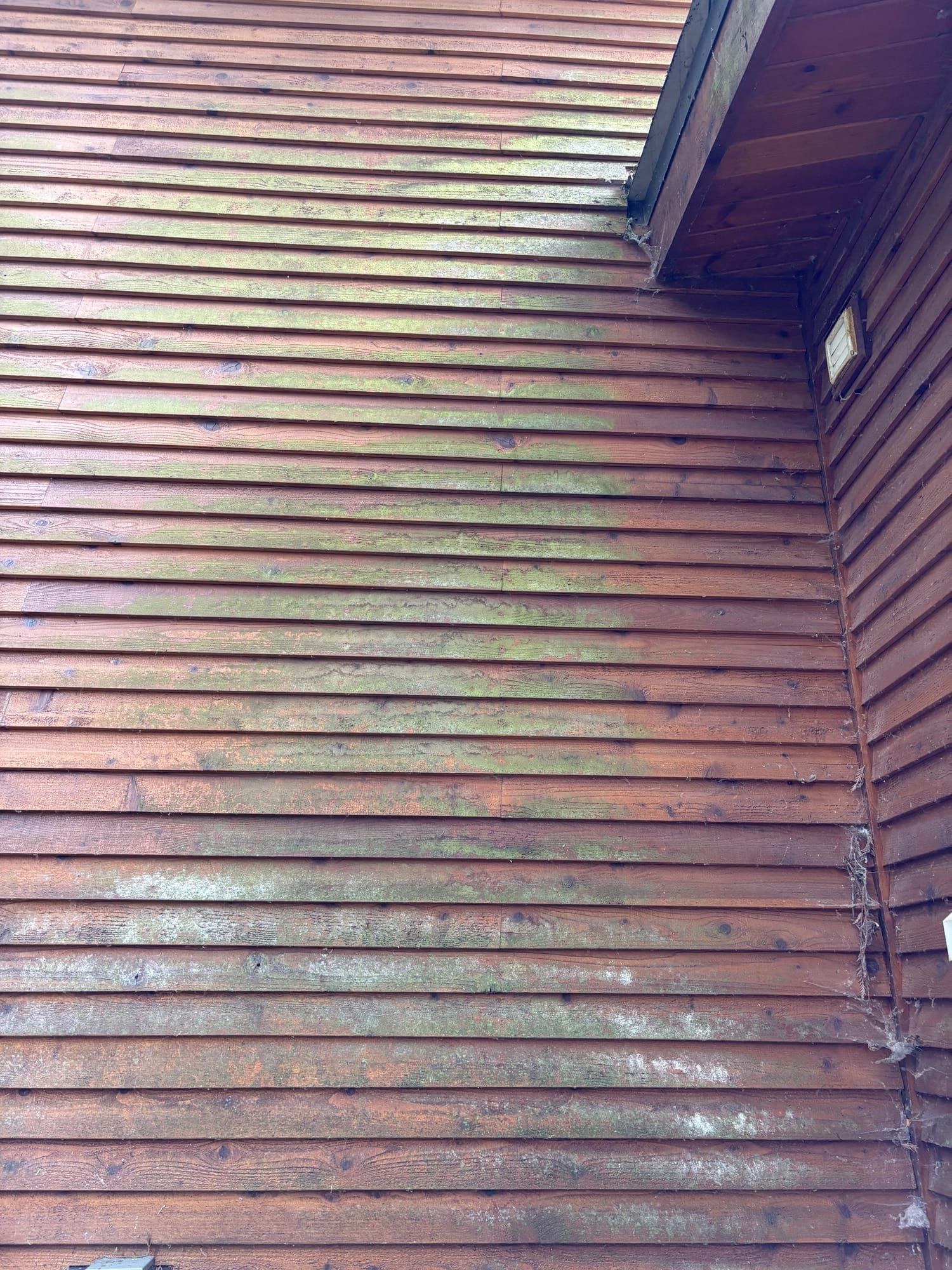
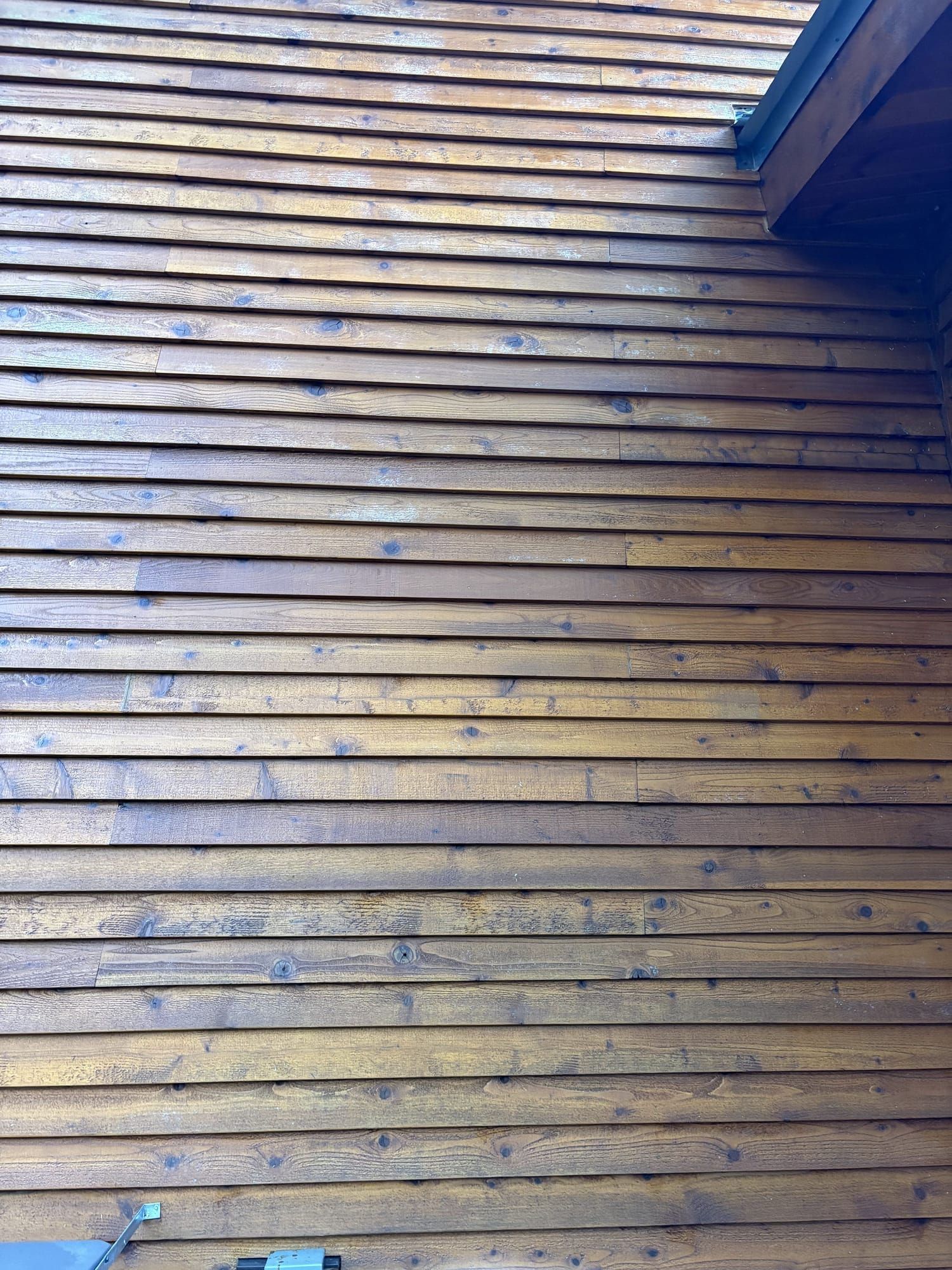
Soft washing uses low pressure and specialized cleaning solutions to safely remove organic growth like moss, algae, and mildew. Unlike traditional pressure washing, which relies on high pressure to blast away dirt, soft washing kills growth at the root so it doesn't come back as quickly. It's the right method for delicate surfaces like roofs, siding, and painted wood.
Our roof cleaning process uses a sodium hypochlorite-based solution that begins breaking down shortly after application. When diluted with water and exposed to sunlight, air, organic matter, and soil, sodium hypochlorite naturally degrades into simple salt compounds and water. We take care to apply our cleaning solutions responsibly and follow industry best practices to minimize runoff and protect surrounding landscaping throughout the cleaning process.
We take several steps to protect your landscaping. Plants are rinsed before, during, and after the service. Water dilutes the cleaning solution, and once diluted it drains safely into the ground. Pets should stay indoors during the service as a precaution. Once the area has been rinsed it's safe again.
Every property is different, but here's what most jobs run: roof cleaning $300–$600, house washing $350–$700, gutter cleaning $200–$400, pressure washing (driveways, patios, walkways) $200–$450, and window cleaning $200–$400. Send a few photos of your property and we can usually give you an accurate number before we ever show up.
Asphalt shingles (damages the granule coating, voids most warranties), painted wood siding and trim (strips paint), cedar shake, stucco, older brick and mortar joints (water intrusion, crumbling), and most decorative stone. For any surface you're not certain about, low-pressure soft washing with the right cleaning solution is the safer bet. We assess the surface before starting and adjust our approach — we don't just point a pressure washer at everything.
Yes, if done wrong. Vinyl can crack or have water forced behind panels if the pressure is too high or the nozzle angle is perpendicular to the surface. Hardie board is more tolerant but still needs correct technique to avoid water intrusion at seams and edges. For both materials, we use low-to-medium pressure and work top-down at a shallow angle. When there's any doubt, a soft wash — low pressure plus cleaning solution — is safer than turning up the PSI.
Soft washing for the siding, fascia, and painted surfaces — pressure washing for the concrete and hardscapes. House siding accumulates mold, mildew, and algae on surfaces where high pressure would strip paint or force water into seams. The right process uses a low-pressure cleaning solution (soft wash) on the exterior walls, then switches to higher pressure for driveways, walkways, and patios. We adjust automatically depending on the surface — you don't need to choose one or the other upfront.
It's okay for very light mildew maintenance on siding between professional cleanings — spray it on and let rain do the rinsing over months. But it won't remove existing staining or heavy buildup, and waiting 3–6 months for slow results isn't practical when you're prepping for a sale, a paint job, or simply want the house to look right now. A professional house wash removes staining in a single visit and reaches soffits, trim, and window frames that a spray-and-forget product won't.
Spring (March–May) is the most popular window — after a wet winter that's left mold and algae on every surface, before you're hosting summer company. Fall is the second-best choice: washing before the rainy season prevents moss from establishing over winter. We work year-round, and it's worth timing a wash at least 48 hours before heavy rain so surfaces can dry and any cleaning solution can finish working. If you're preparing for sale or a paint job, don't wait for a specific season — the sooner the better.
Most single-family homes take 2–4 hours for a full exterior soft wash, including setup and teardown. Larger homes, homes with a lot of detail (many windows, complex rooflines, big decks), or properties with additional surfaces to clean — fences, patios, outbuildings — take longer. We'll give you a time estimate when we book so you know when to be available to move hoses or unlock gates.
See all FAQs →
If you can see green on the north side, it's time. Send a photo for a fast quote.